
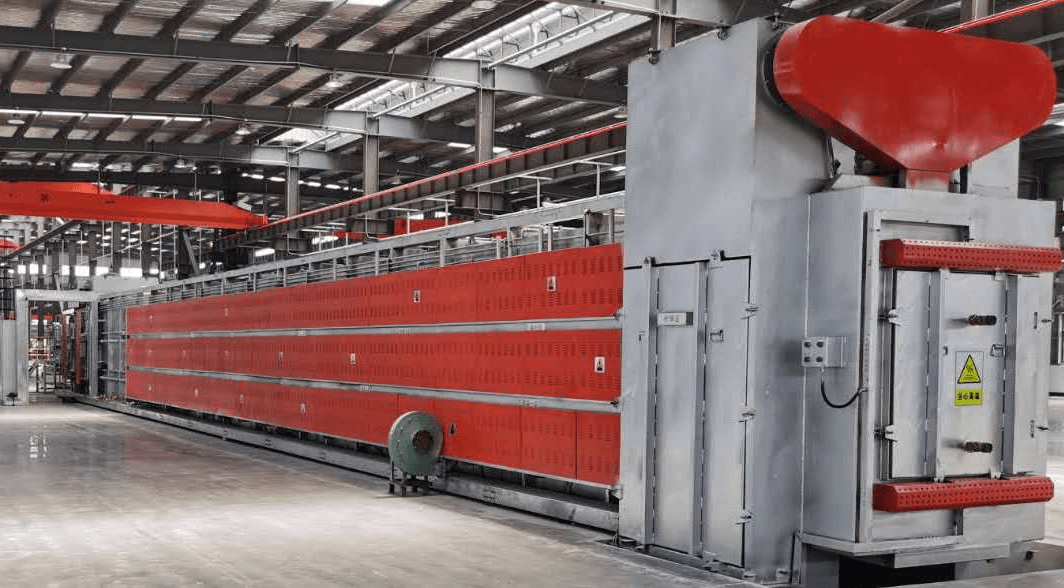
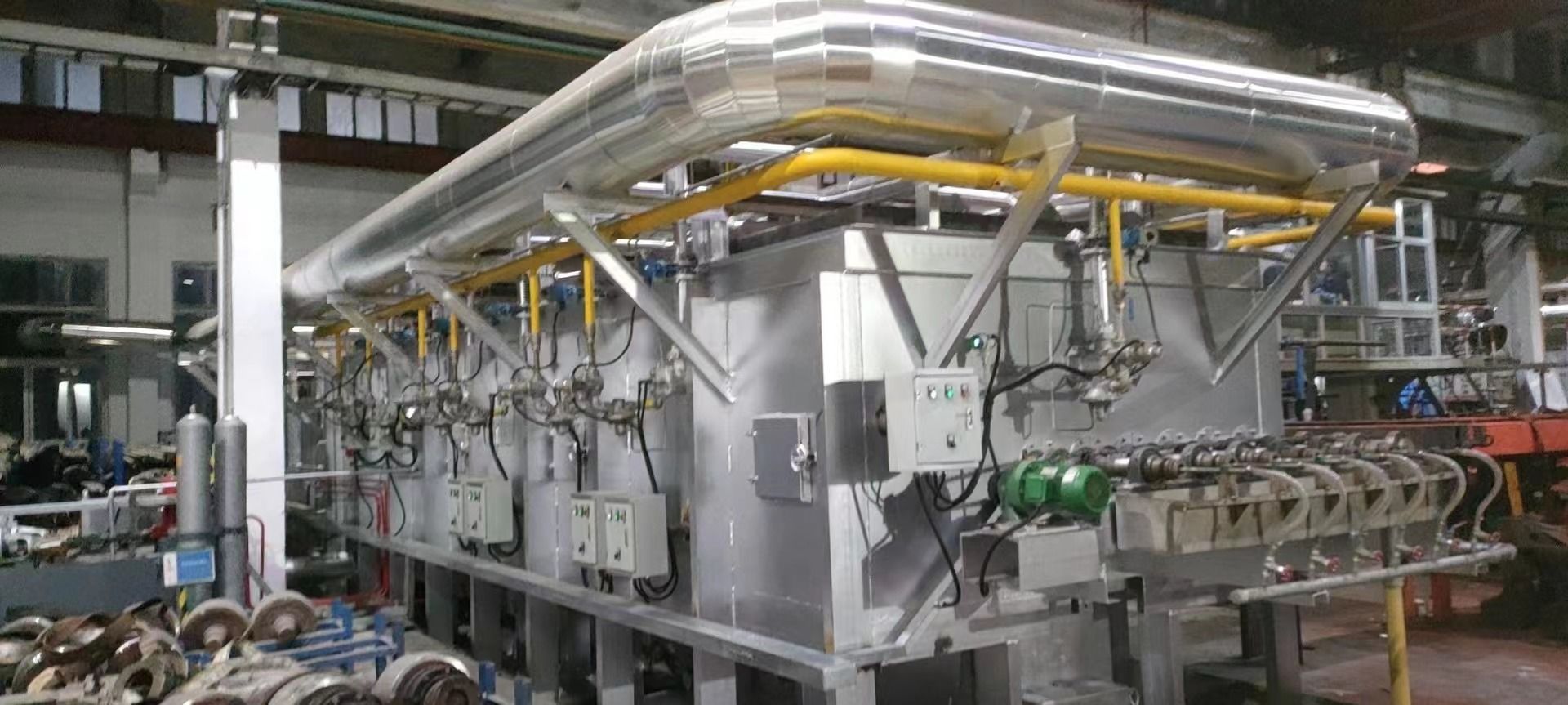
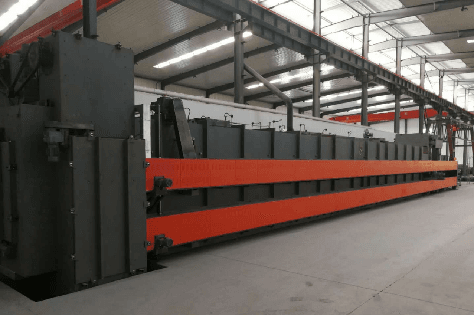
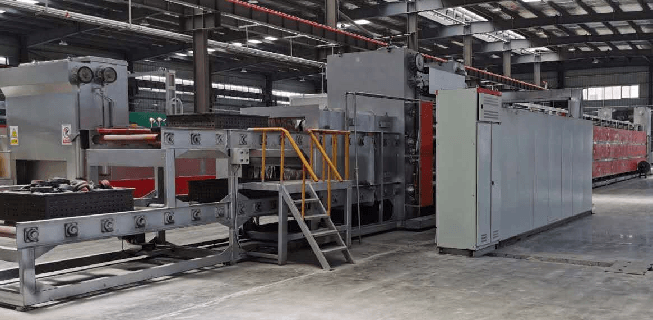
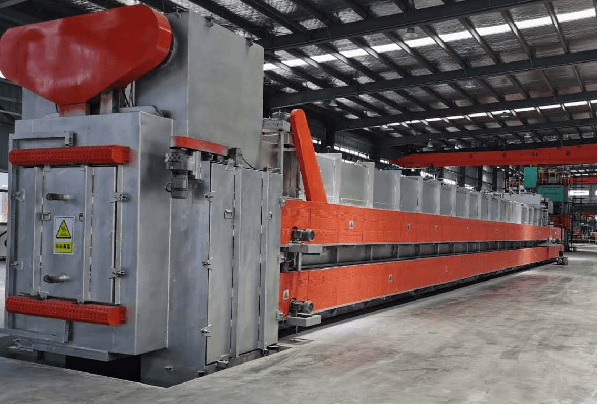
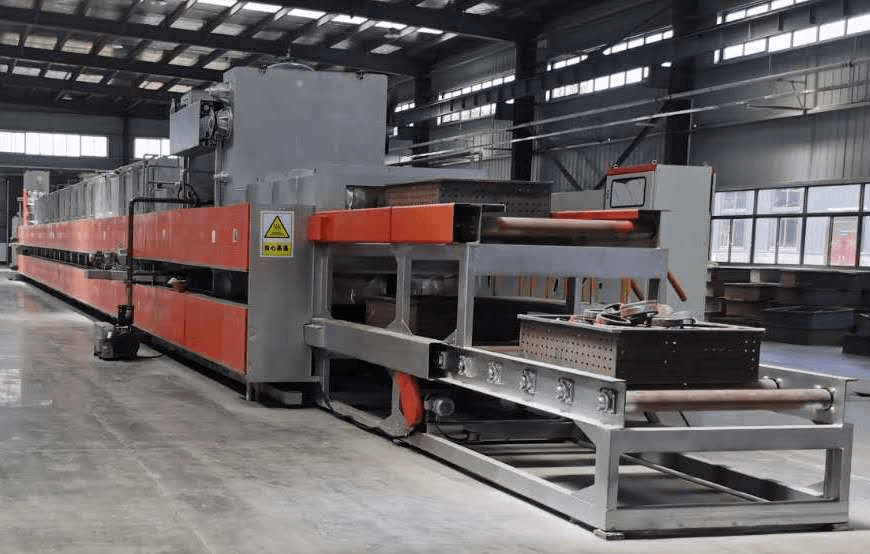
The RCT double-layer spheroidizing annealing furnace is specialized for the spheroidizing annealing of bearing rings and bearing steel tubes. Its design is rooted in two core principles: the process specificity of bearing spheroidizing annealing and the natural upward movement of heat. Thermodynamically, the heat input required for heating matches the heat output released during cooling; thus, the furnace integrates a waste heat recovery system to reuse the heat emitted during the cooling stage.Key structural and functional features include:Counter-Current Heat Exchange Design: The furnace adopts an upper-layer feeding and lower-layer discharging configuration. This layout enables the recovery of over 90% of the waste heat released during annealing to preheat incoming workpieces, significantly enhancing the uniformity of product heating.Same-End Loading/Unloading: Feeding and discharging operations are concentrated at the same end of the furnace, streamlining material handling for workers, eliminating the need for cross-end movement, and reducing labor intensity.High-Temperature Lifting Platform for Workpiece Transfer: Workpieces are transferred between layers using a high-temperature lifting platform. This design minimizes furnace door opening frequency, effectively "locking" furnace temperature to reduce heat loss, and cuts down on protective atmosphere consumption—overcoming the limitations of traditional straight-through furnaces with dual-end openings (which suffer from severe heat and atmosphere leakage).

Features of the Spheroidizing Annealing Furnace
Automated & Traceable Continuous Heat Treatment System
The furnace adopts all-electric or hybrid electric-gas heating modes and operates in a continuous production mode. The entire heat treatment process is fully automated, with integrated data logging functionality to ensure complete traceability of process parameters (e.g., temperature, atmosphere composition, holding time)—meeting the quality control requirements of high-precision component manufacturing.
High-Thermal-Efficiency Fiber Furnace Lining
The furnace lining is constructed from high-performance refractory fiber materials. This design reduces heat storage and heat loss through the furnace wall, significantly improving thermal efficiency (typically by 20–30% compared to traditional brick linings) and lowering operational energy costs.
C-Shaped Furnace Body with Dual Independent Chambers
The furnace features a scientifically optimized C-shaped structure. Workpieces on the loading/unloading platform undergo counter-current heat exchange between the lower (cooled discharge) and upper (preheated feed) layers, enhancing heating uniformity. The furnace is divided into two vertically independent chambers with separate temperature control systems, which improves temperature control precision (±1 °C typically) by minimizing cross-chamber thermal interference.
Same-End Stepped Loading/Unloading with Waste Heat Drying
Loading and unloading are integrated at the same end via a stepped layout, simplifying operator workflows. A waste heat drying chamber is installed between the gas-locking chamber and the loading/unloading platform: it uses residual heat from the furnace to dry workpieces, reducing water vapor ingress (a key cause of decarburization and oxidation) and further improving energy efficiency.
Stainless Steel Radiant Tube Heating & Precision Temperature Control
Heating elements are composed of high-quality stainless steel radiant tubes, which isolate the heating source from the furnace atmosphere—simplifying maintenance and extending element lifespan. The temperature control system combines regulators with high-precision temperature instruments, ensuring uniform temperature distribution (temperature uniformity ≤ ±5 °C) within the furnace cavity.
Protective Atmosphere for Oxide-Free Surfaces
A nitrogen-based protective atmosphere with carbon-enriched gas is employed. This atmosphere maintains a neutral or slightly carburizing environment during annealing, eliminating oxide scale formation on workpiece surfaces and preserving the steel’s original metallographic structure.
Welded Furnace Body with Enhanced Sealing
The furnace shell is fabricated via full-welded construction, with gas-locking chambers installed at both the inlet and outlet. This design minimizes atmosphere leakage and heat dissipation, further enhancing energy efficiency compared to conventionally sealed furnaces.
High-Reliability Automatic Control Components
Core electrical components of the automatic control system are sourced from high-quality domestic or imported suppliers (e.g., Siemens, Omron), ensuring long-term operational stability of the furnace.
Dual-Sensor Temperature Control with Calibration Functionality
Each heating zone is equipped with a dual-thermocouple, dual-instrument, and regulator control system. This redundant design ensures accurate maintenance of process temperatures; additionally, thermocouple calibration ports are integrated to verify sensor accuracy periodically, meeting metrological traceability requirements.
Thermal Stirring Fan for Uniform Atmosphere & Temperature
The furnace is fitted with thermal stirring fans that circulate the internal atmosphere. This promotes uniform distribution of temperature and protective gas, ensuring consistent heat treatment results across all workpieces (reducing hardness variation to ≤ 10 HV typically).
Integrated Touchscreen Monitoring & Data Management System
A touchscreen-based supervisory control system enables real-time monitoring of key process parameters (e.g., furnace temperature, atmosphere flow, workpiece position). It also provides: fault diagnosis (with root cause and troubleshooting guidelines), alarm logging, historical temperature/process curve storage, and entry/exit time recording. All data can be downloaded and archived for quality audits or process optimization analysis.